Building an extension for a residential house is an exciting project that can add valuable space and enhance your home.
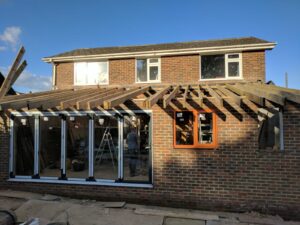


Let’s break down the process step by step:
- Secure the Site and Insure:
- Before starting any work, secure the site. Make sure your existing home insurance covers the extension project.
- Consider specialist policies for substantial home improvements.
- Planning and Design:
- Define your goals: What purpose will the extension serve? Extra living space, a new kitchen, or a home office?
- Work with an architect or designer to create detailed plans.
- Obtain necessary planning permissions and building regulations approval.
- Budgeting:
- Determine your budget. Consider construction costs, materials, labor, and any unforeseen expenses.
- Get quotes from builders and tradespeople.
- Foundation and Groundwork:
- Excavate the area for the foundation.
- Choose the appropriate foundation type (e.g., strip, raft, or piled).
- Pour the concrete foundation and allow it to cure.
- Structural Work:
- Build the walls, roof, and floor structure.
- Install lintels and beams as needed.
- Ensure proper insulation and damp-proofing.
- Services Installation:
- Extend plumbing, electrical, and HVAC systems.
- Plan for lighting, sockets, and switches.
- Consider underfloor heating or radiators.
- External Walls and Roofing:
- Construct external walls using brick, block, or timber frame.
- Install windows, doors, and roof coverings (tiles, slates, or flat roofing).
- Internal Finishes:
- Insulate internal walls.
- Plaster or drywall the walls and ceilings.
- Lay flooring (e.g., hardwood, laminate, or tiles).
- Kitchen and Bathroom Fittings:
- Install kitchen cabinets, appliances, and worktops.
- Fit bathroom fixtures (sink, toilet, shower, bathtub).
- Decorative Finishes:
- Paint or wallpaper the walls.
- Install skirting boards, architraves, and trim.
- Add any decorative features (e.g., cornices or coving).


- Remember that the timeline and specific tasks may vary based on the size and complexity of your extension. Consulting professionals and following a detailed plan will help ensure a successful project. Happy building!